
Grab a free trial and go bananas!
- Download all lessons to PDF
- Download and edit all resources
- Share lessons with your colleagues
- Save favourite lessons for later

Planning With AFOREST
Learning Intention: Generating ideas for a persuasive text.
Planning With AFOREST
Learning Intention: Generating ideas for a persuasive text.
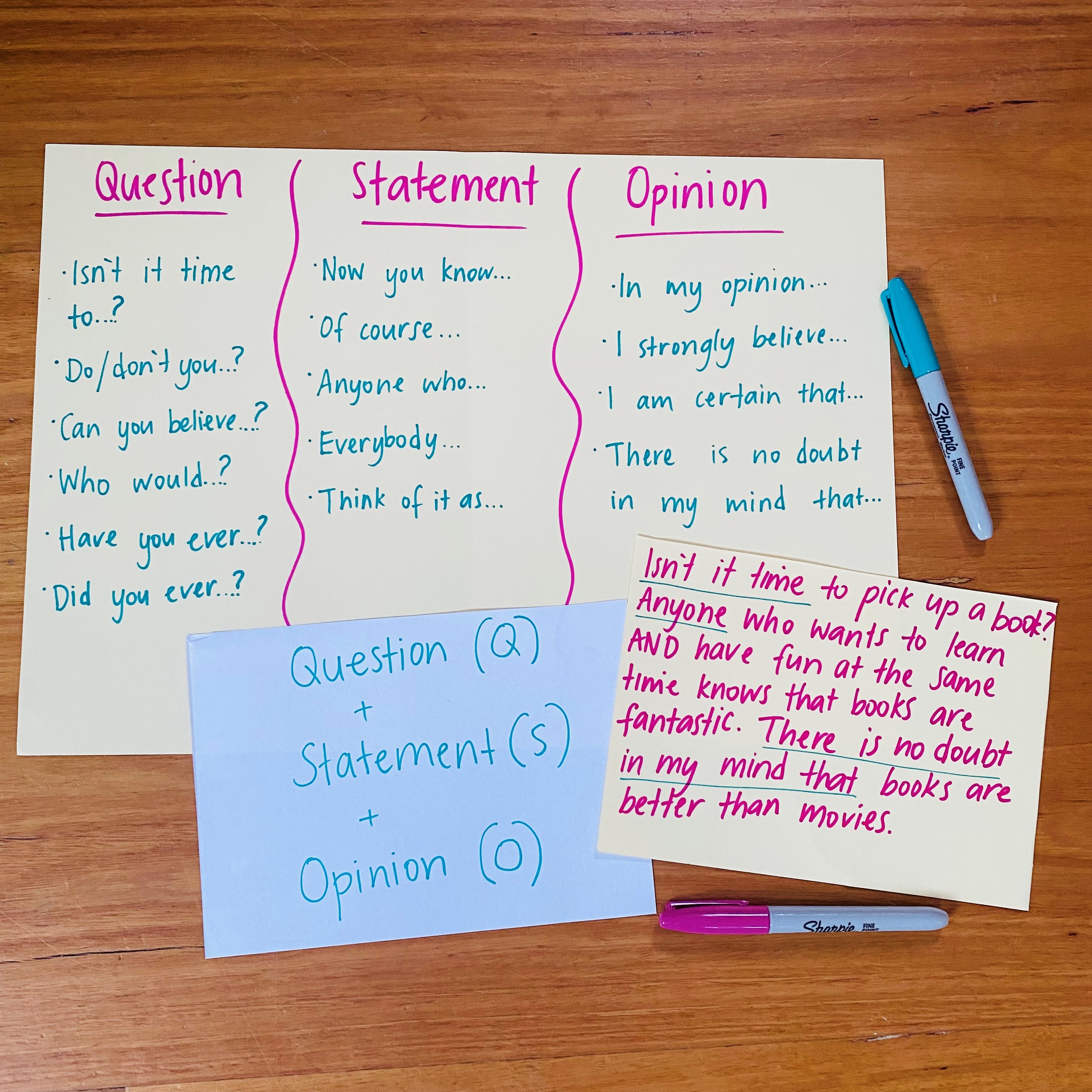


- Pencils
- Paper
- Markers
Grade 6 - AC9E6LY06
Grade 5 - AC9E5LY06
Grade 4 - AC9E4LY06
Grade 3 - AC9E3LY06
- I can brainstorm reasons to support my argument.
- I can brainstorm supporting details using AFOREST.
Modelled
Note: This lesson will work best if your students are familiar with AFOREST as a framework. Check out this lesson which introduces students to the acronym first!
Bring attention to the lesson’s learning intention and discuss. Introduce students to the new mini unit which will provide them with a range of planning tools so they can dive straight into their persuasive writing.
Rule up three columns on the board/butcher’s paper, as below:
Topic: Books are better than movies
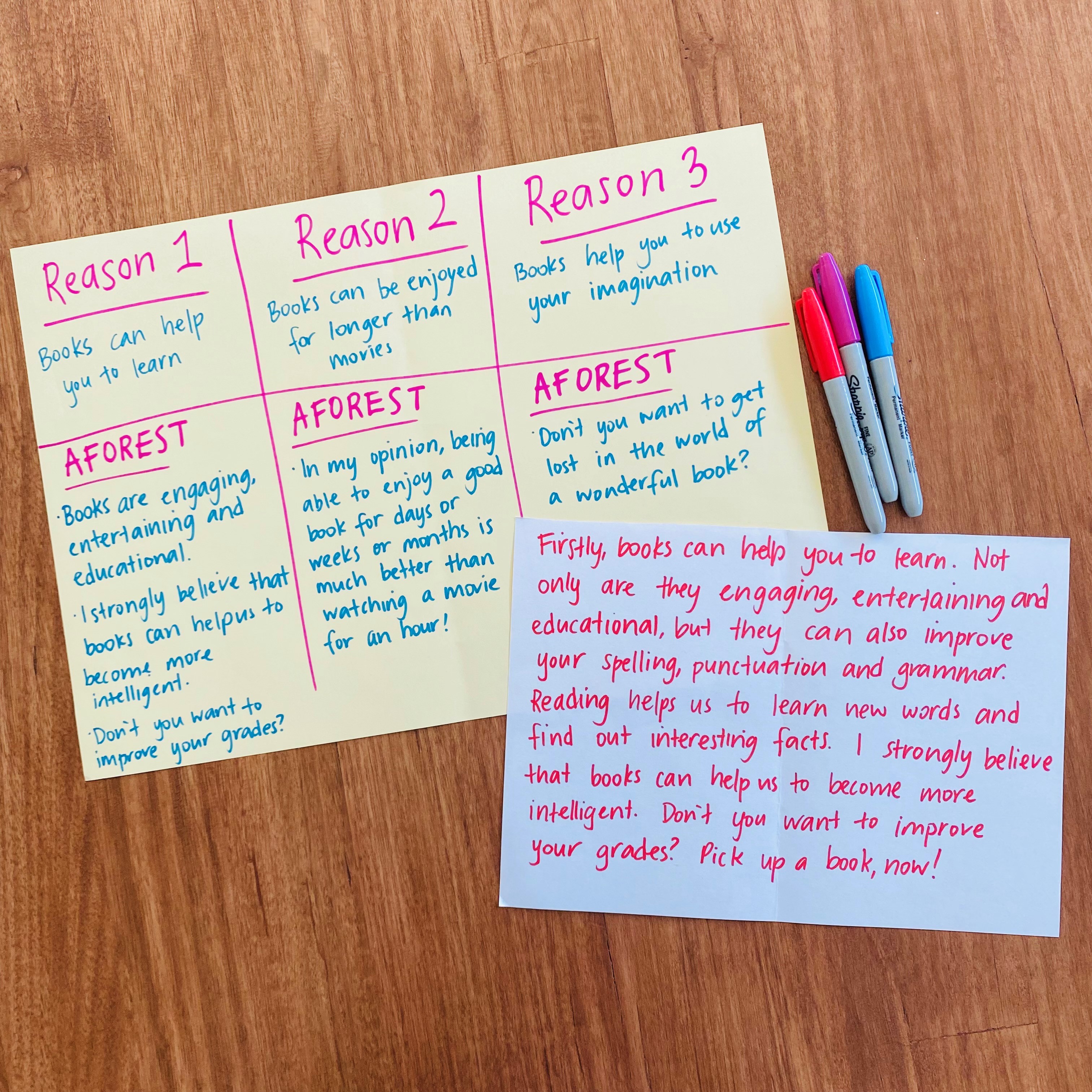
Reason 1 Reason 2 Reason 3 Books can help you to learn Books can be enjoyed for longer than movies Books help you use your imagination Supporting Details Using AFOREST Supporting Details Using AFOREST Supporting Details Using AFOREST Books are engaging, entertaining and educational. In my opinion, being able to enjoy a good book for days or weeks or months is much better than watching a movie for an hour! Don’t you want to get lost in the world of a wonderful book? I strongly believe that books can help us to become more intelligent. Reading books can improve your spelling, punctuation and grammar. Don’t you want to improve your grades? Now think aloud as you start to brainstorm reasons to support your argument (at least 3). Explain that these reasons will form your paragraphs. Once you’ve added these to your chart, rethink aloud as you brainstorm some statements incorporating AFOREST devices. Refer back to your AFOREST anchor chart if possible. E.g. “I think I could use the rule of three here…. Hmmm… Books are engaging, entertaining and educational - that’s some alliteration too!”; “How about a rhetorical question to support how books help you use your imagination… Don’t you want to get lost in the world of a wonderful book?”
As you go, revisit the effectiveness of these devices on the reader and discuss how they can help to make your piece more convincing. Continue to add ideas with help from students, until you have at least 3-4 AFOREST supporting details for each reason. Aim to have a variety of devices for each reason.
Now model constructing a body paragraph using the ideas you generated in your brainstorm, e.g.
Firstly, books can help you to learn. Not only are they engaging, entertaining and educational, but they can also improve your spelling, punctuation and grammar. Reading helps us to learn new words and find out interesting facts. I strongly believe that books can help us to become more intelligent. Don’t you want to improve your grades? Pick up a book, now!Discuss how the Planning with AFOREST brainstorm made starting writing much easier as you had already come up with some great ideas - the hard work was already done!
Guided
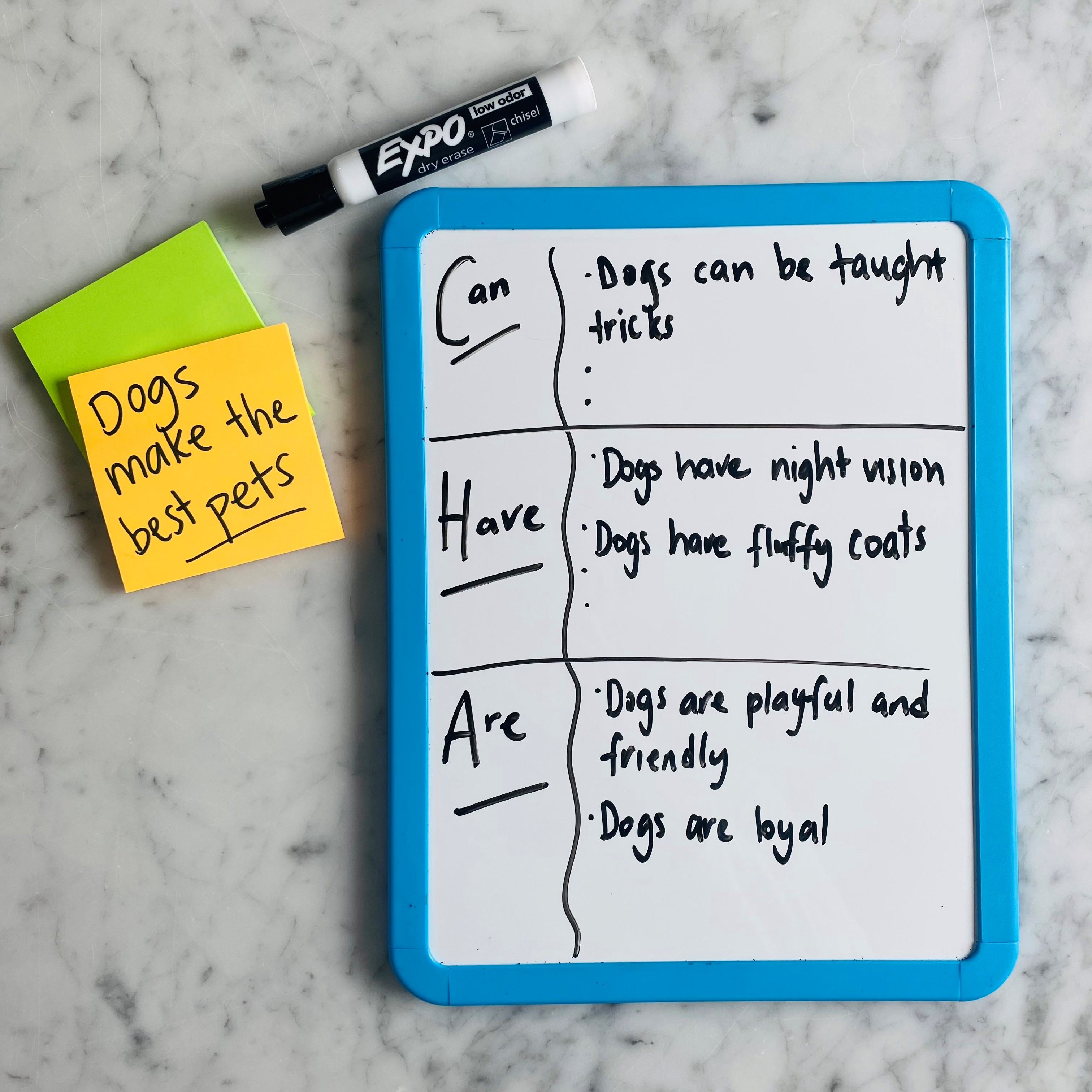
Divide students into small groups and provide them with a persuasive topic, e.g. Everyone should learn to cook, Dogs are the best pets etc. Students will now spend 10 minutes using the same chart as above, brainstorming 3 reasons to support their argument, then thinking about some supporting details using AFOREST.
Independent
Now, using the ideas they generated from the brainstorm, students will have-a-go at writing their own persuasive body paragraphs relating to the topic they were given with their group. Allow 10 minutes before stopping students and checking if any need redirection or more detailed scaffolding. Spotlight a couple of fantastic examples of students’ writing and think aloud as you notice how they used AFOREST effectively to convince the reader.
Finish the lesson with some sharing of writing, then reflect on success criteria. Ask students how practising a strategy like this can support them to feel more confident when starting a piece of persuasive writing, and discuss the effectiveness of the Planning With AFOREST chart. Revisit this strategy a few times to develop students’ confidence using it.
- Support Students: Students can be provided with additional picture prompts and sentence stems. Support them to work with a partner during the independent writing stage.
- Extension Students: Encourage students to incorporate as much detail as possible using adjectives, verbs and adverbs - this will make their writing piece even stronger.
- Formative assessment:
- Have my students successfully brainstormed reasons to support their argument?
- Have they brainstormed supporting details using AFOREST?
Sign up for hundreds more lessons like this!
Access over 600 lessons, 50 units and oodles of premium editable resources to suit the literacy needs of K-6 students.Start a 7 day free trial today!