
Grab a free trial and go bananas!
- Download all lessons to PDF
- Download and edit all resources
- Share lessons with your colleagues
- Save favourite lessons for later

Story Mountains
Learning Intention: Understand the structure of a narrative.
Story Mountains
Learning Intention: Understand the structure of a narrative.


- Focus text
- Plain paper
- Coloured pencils
- Post-it notes
Grade 3 - AC9E3LA03
- I can identify the sections in a narrative.
- I can discuss the features of each section.
Modelled
Discuss the concept of narratives with students. Ensure students are reminded that fiction texts are imaginative narratives with a series of events.
Revise the main sections of a narrative:
-Orientation
-Series of Events/complication
-ResolutionTell students that today you will be reading a narrative to them. Ask students to think about the different sections to help their understanding of the text.
Read the focus text.
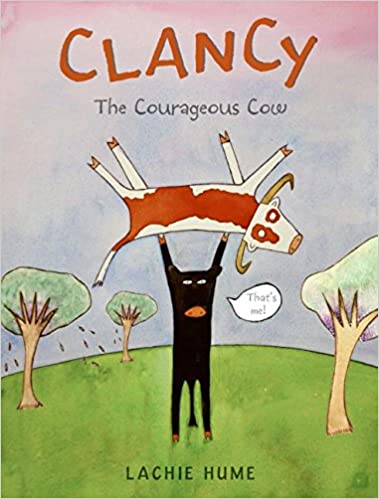
Eg: ‘Clancy The Courageous Cow’ by Lachie Hume.
Guided
As a class, discuss the story according to the narrative structure.
Orientation - Who was the main character? What was the setting?
Series of Events/Complication - What events occurred? What was the problem?
Resolution - How was this solved? How did the story end?Provide students with small whiteboards. Ask students to draw a diagram which shows the structure of a narrative. Tell students that they can choose to represent this is any type of drawing/diagram.
Eg: flow chartAllow students to share their responses with partners and compare. As a class, go through student responses and address misconceptions which arise according to the narrative structure. Eg: Wrong order structure.
Record ideas and class discussion so students can refer back to these aspects of a narrative structure.
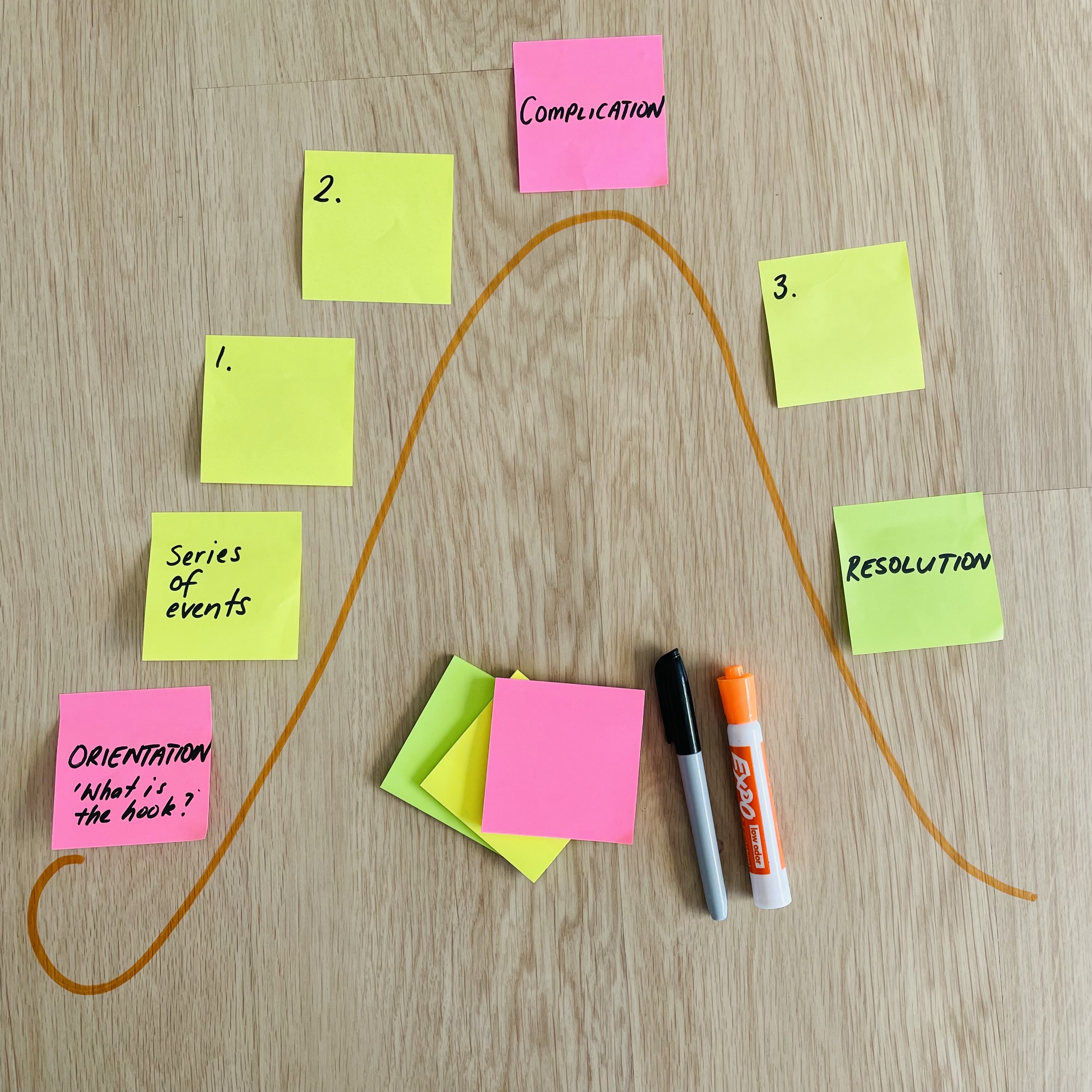
Explain to students that they will be showing their understanding of the texts’ narrative structure through story mountains. Tell students that the bottom of the mountain will represent the beginning and the top will be the complication and then the resolution will be on the other side of the mountain.
As a class, model the beginning of the story mountain by drawing a mountain and using a Post-it note to capture the setting and the characters. Stick this post-it note at the bottom of the mountain.
Independent
In small groups, students will use different coloured Post-it notes to represent each section of the narrative structure in the focus text, using a story mountain. Ask students to write a sentence or draw a picture which captures the main ideas.
Eg: The problem in the story is…
This is a problem because…
In the end the problem was solved by…Monitor students as they work and remind students to refer back to the board.
Allow students to share their story mountains with their tables groups or partners. This will allow students to develop a deep understanding of all aspects of the text.
- Support: provide guidance and support by sticking Post-it notes in the text when the problem occurs to support students understanding the different parts of a text.
- Extension: Ask students to include text evidence throughout, to prove what they are stating.
- Could students identify the orientation, series of events, complication and resolution?
- Did students demonstrate an understanding of the structural features eg. setting and character orientation?
- Were students able to represent their understanding through both visual and written forms?
- Students can create story frames with lego or playdough.
Sign up for hundreds more lessons like this!
Access over 600 lessons, 50 units and oodles of premium editable resources to suit the literacy needs of K-6 students.Start a 7 day free trial today!