
Grab a free trial and go bananas!
- Download all lessons to PDF
- Download and edit all resources
- Share lessons with your colleagues
- Save favourite lessons for later

Splendid Sentences - 3W Sentences
Learning Intention: Expanding sentences using the 3Ws (when, where, why).
Splendid Sentences - 3W Sentences
Learning Intention: Expanding sentences using the 3Ws (when, where, why).


- Picture prompts
- Paper
- Markers
- Pencils
Grade 2 - AC9E2LY06
- I can create detailed sentences using the 3Ws (when, where, why).
Modelled
Bring attention to the lesson’s learning intention and introduce the mini-unit which will expose students to a range of sentence structures, as we work to enhance their writing ability - for both fiction, e.g. narrative text types and nonfiction pieces, e.g. information report text types.
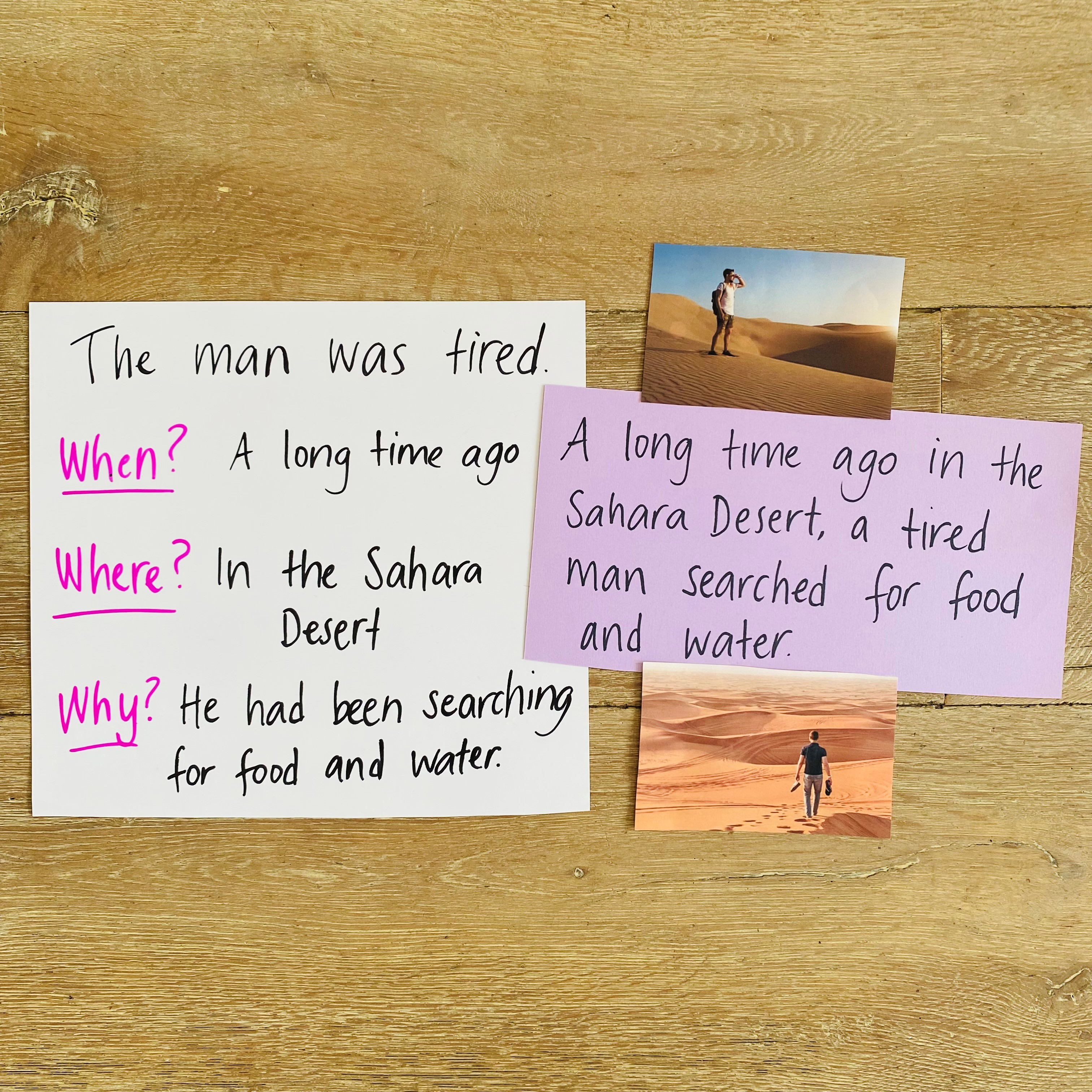
Using a picture prompt, e.g. photo, image, front cover of a book, think aloud as you verbally construct a simple sentence to describe what you can see (limit the details though). Using the example image of a man hunched over in the desert, you could model writing “The man was tired”.
Now, explain that we can include extra information in sentences to make them more interesting. By considering the when, where and why, we can create more detailed sentences, and make our writing more engaging for the reader.
Guided
Reread the sentence, “The man was tired”, then ask students the following questions (encourage them to share their ideas, brainstorm some suggestions, and think aloud as you select some of the stronger responses to use):
- When (was the man tired?) e.g. a long time ago
- where (was the man tired?) eg. in the Sahara desert. These are phrases as they don’t contain a verb.
- Why (was the man tired)? E.g. he had been searching for food and water for days (a clause)Now model using the information you gathered from the 3Ws to put a more detailed sentence together, e.g. A long time ago, in the Sahara desert, a tired man searched for food and water.
Compare the first and second sentences now, and ask students which is more effective, and why: The man was tired vs A long time ago, in the Sahara desert, a tired man searched for food and water.
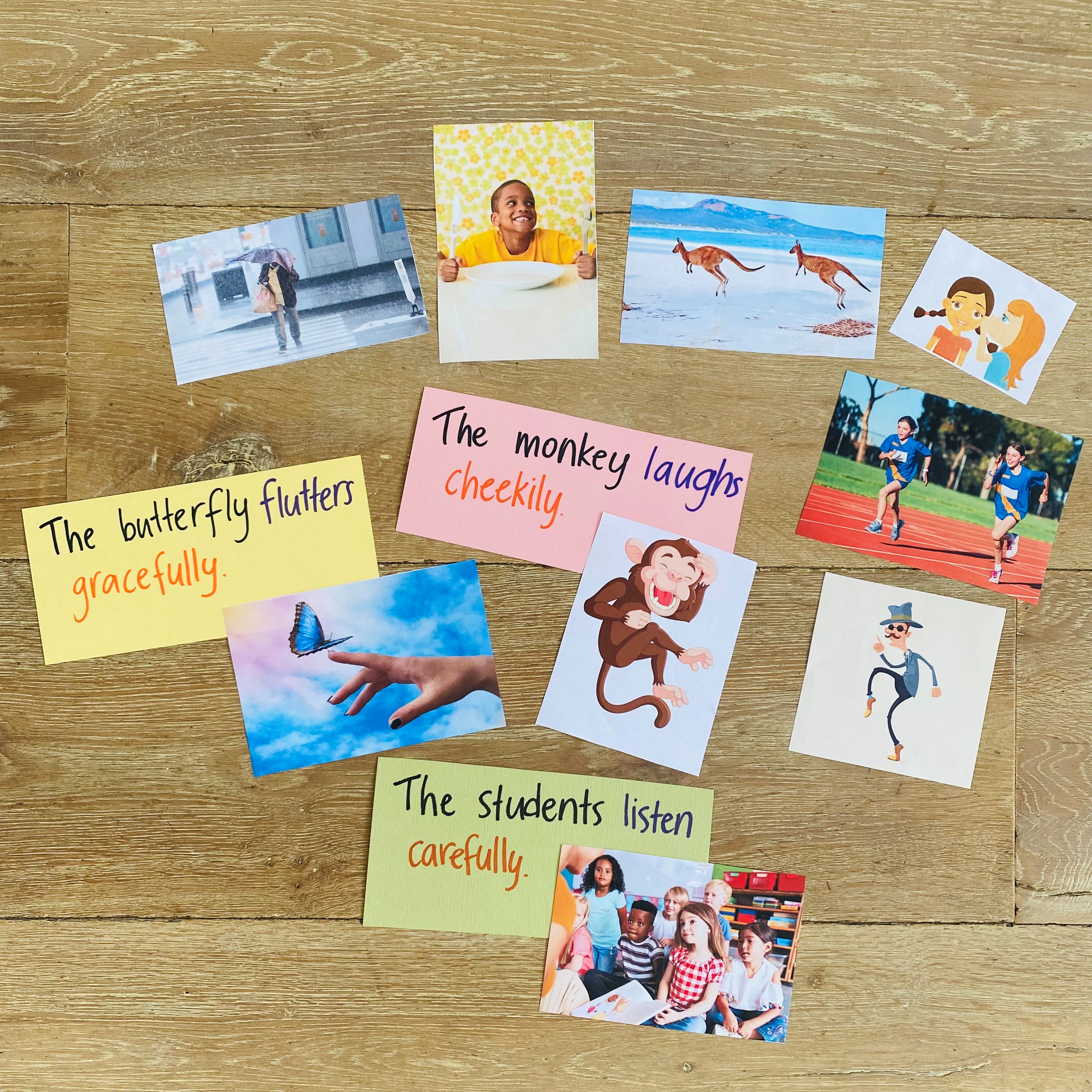
Repeat this process with a few more picture prompts so that students can become more familiar with the 3W sentence structure, then have them practice in pairs/small groups using different picture prompts, or by providing them with some simple sentences to expand on using the 3Ws.
Independent
Now provide students with a new picture prompt or simple sentence (or both, depending on ability level), and have them use the 3Ws to create a detailed, engaging 3W sentence on their own. Allow 10 minutes before stopping students and checking if any need redirection or more detailed scaffolding.
To finish the lesson, students can compare the 3W sentences they created. Reflect on student learning by asking students how 3W sentences can help them as writers.
- Support Students: Students can work in pairs/small groups for all of the lessons. Provide them with a picture prompt and, model writing a simple sentence to accompany it for them. This will make the 3W process easier for them.
- Extension Students: Encourage students to further enhance the level of detail in their sentences by including adjectives.
- Formative assessment:
- Have my students successfully constructed 3W sentences focusing on a subject (such as a person - the 'who')?
- Have my students included a 'when' to give their sentence/s more detail?
- Have my students included a 'where' to give their sentence/s more detail?
- Have my students included a 'why' to give their sentence/s more detail?
Sign up for hundreds more lessons like this!
Access over 600 lessons, 50 units and oodles of premium editable resources to suit the literacy needs of K-6 students.Start a 7 day free trial today!