
Grab a free trial and go bananas!
- Download all lessons to PDF
- Download and edit all resources
- Share lessons with your colleagues
- Save favourite lessons for later

Splendid Sentences - Ad/Noun/Is Sentences
Learning Intention: Enhancing my writing with Ad/Noun/Is sentences.
Splendid Sentences - Ad/Noun/Is Sentences
Learning Intention: Enhancing my writing with Ad/Noun/Is sentences.


- Picture prompts
- Paper
- Markers
- Pencils
- Post-it notes
Grade 2 - AC9E2LY06
- I can construct an engaging sentence using an adjective to describe a noun, followed by “is”.
Modelled
Bring attention to the lesson’s learning intention and revise learning from the previous lesson in the mini unit, relating to Verb/How sentences.
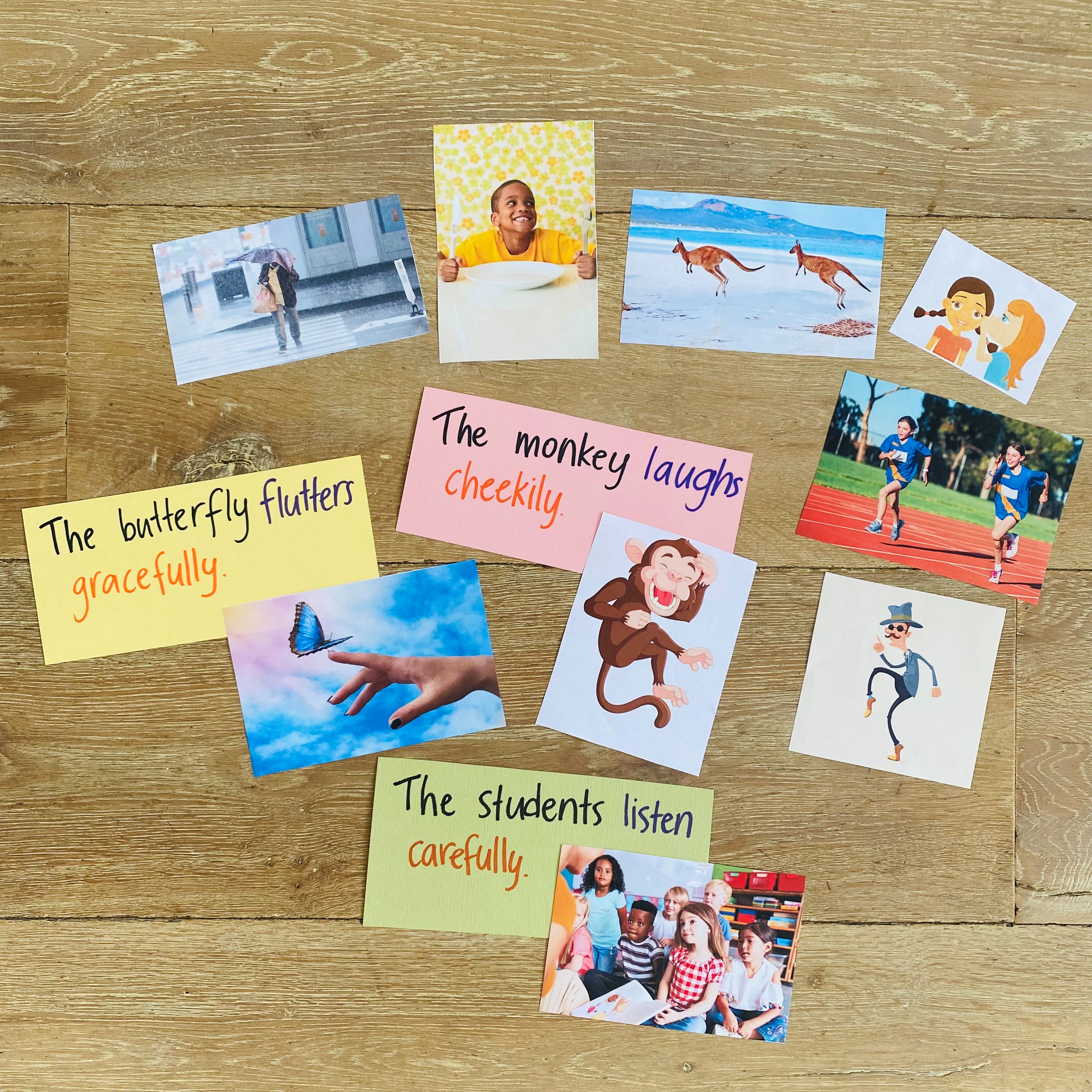
Introduce students to the structure that will be explored today - Ad/Noun sentences, explaining that this structure is quite similar to Verb/How sentences, as we have two parts of speech (adjectives and nouns) that must be used together in order for the sentence to follow the correct structure. Show them a couple of written examples - The golden sun is shining; The fluffy cat is sleeping; My caring grandma is the best.
Think aloud as you identify each of the adjectives and nouns in each of the sentences, revising the meaning of these with students as you go. Underline/highlight them. Then think aloud as you notice that after every single adjective and noun in all of the sentences, the same word appears - ask students what they notice - is.
Discuss how by including an adjective before the noun, we can make our writing much more engaging for the reader.
Note: This sentence structure can be adapted to meet the needs of your students, ie. the use of “is” means that these sentences will all be written in present tense. You might like to tailor it so that your students can choose to play around with the structure and tense - e.g. by using “was” or alternatively, following the noun with a verb.
Guided
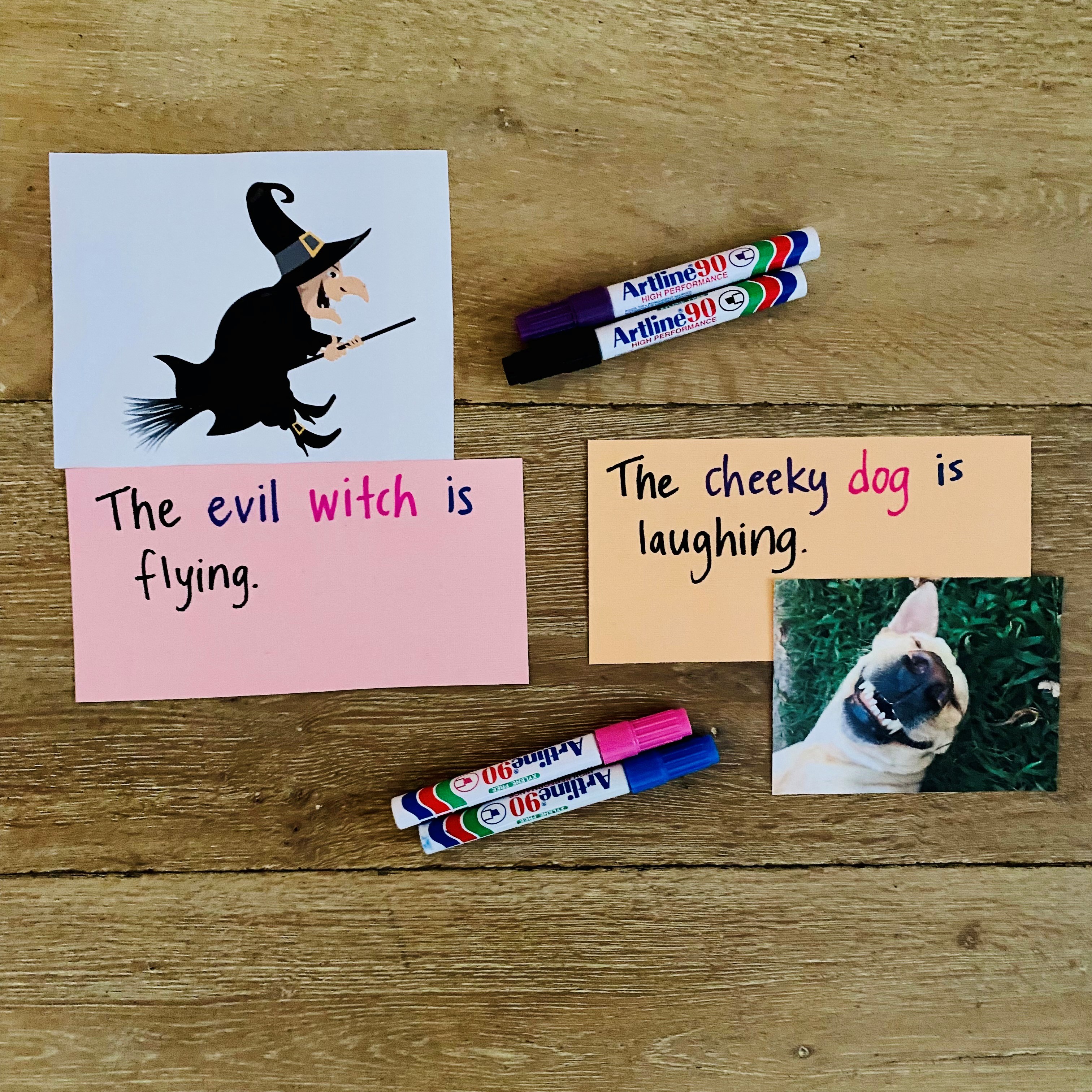
Using a picture prompt, (e.g. photo, image, front cover of a book), brainstorm possible nouns and adjectives that could be used to put a sentence together and describe it, using one colour for nouns and one colour for adjectives. Then think aloud as you construct an Ad/Noun/Is sentence to best describe what you can see. E.g. using the example image of the dog smiling, you could model writing, “The cheeky dog is laughing”. Ensure you use a different colour to write the adjective, noun and “is” to really reinforce the structure to students.
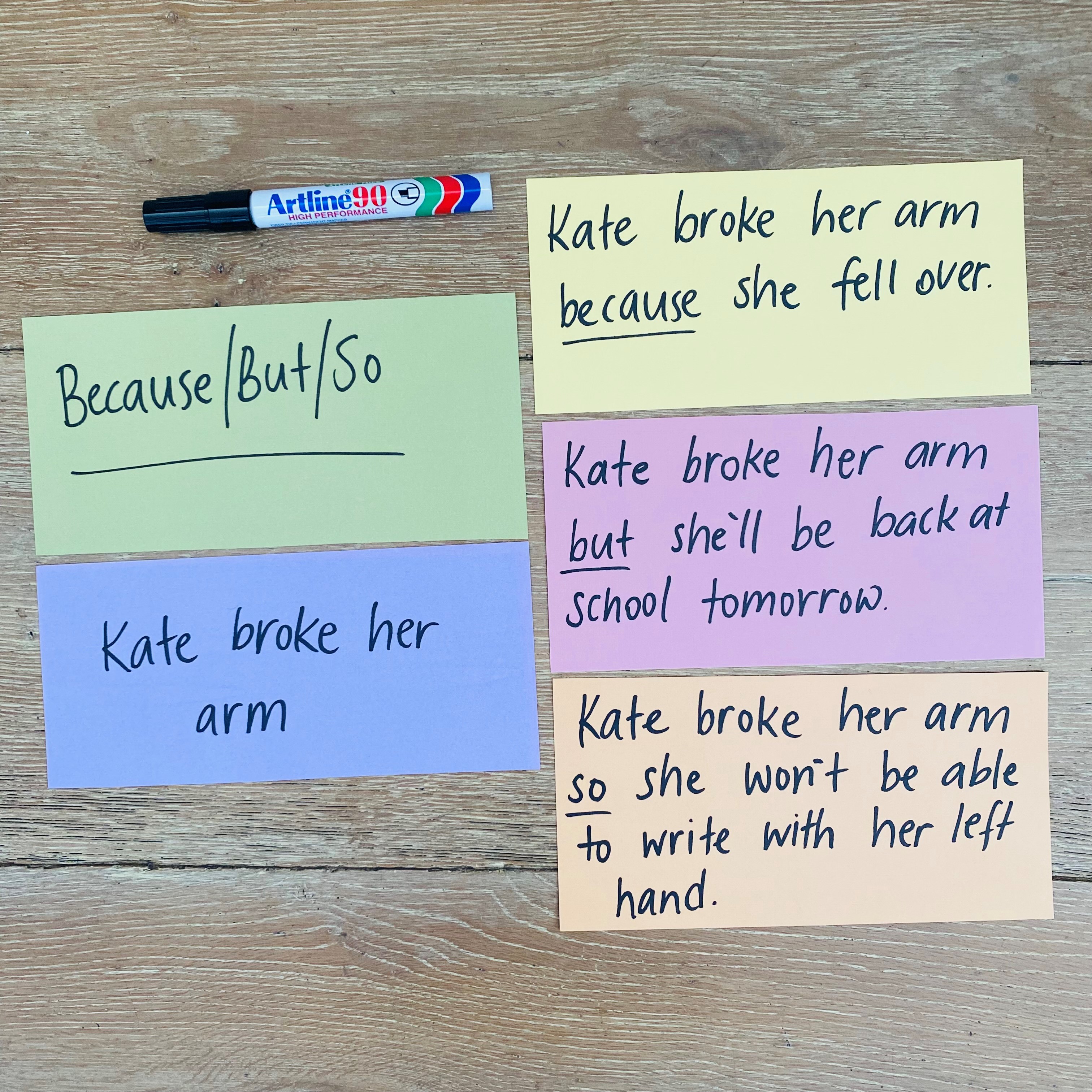
Repeat this process (brainstorming possible nouns and adjectives using a picture prompt) to enable students to build their confidence writing Ad/Noun/Is sentences, then have them practice in pairs/small groups using different picture prompts scattered around the room (post-it notes will work well here). Again, remind them to highlight/underline/use different colours to show the noun, adjective and “is”, reiterating that these must always be together.
Independent
Now provide students with a new picture prompt and have them follow the same process independently. If they are feeling more confident, they might like to have a go at writing a few different Ad/Noun/Is sentences using the same prompt. Allow 10 minutes before stopping students and checking if any need redirection or more detailed scaffolding.
To finish the lesson, students can compare the Ad/Noun/Is sentences they created. Reflect on student learning by asking students how, using adjectives to describe nouns, can make their sentence writing more engaging for the reader, and discuss.
- Support Students: Students can work in pairs/small groups for all of the lessons. Provide them with a picture prompt, and model writing a mentor sentence to accompany it for them e.g. a sentence including either only a noun or adjective (not both) so that they can fill in the blank. Providing students with an alphabetical list of nouns and adjectives can also be helpful.
- Extension Students: Encourage students to further enhance the level of detail in their sentences by including strong verbs and adverbs, referring to learning from previous lessons on Verb/How sentences. Stronger writers can also be challenged to write multiple sentences (using different verbs/adverbs) for the same prompt.
- Formative assessment:
- Have my students successfully used adjectives to describe nouns and constructed Ad/Noun/Is sentences?
Sign up for hundreds more lessons like this!
Access over 600 lessons, 50 units and oodles of premium editable resources to suit the literacy needs of K-6 students.Start a 7 day free trial today!